首先对于vector的赋值方法总结:
1.定义时赋值
1.vector<类型> name(地址,地址);
#include<bits/stdc++.h>
using namespace std;
int main()
{
	string s[] = {"wo","shi","zui","bang","de"};
	vector<string> ex1(s, s + 5); //注意从第一个地址到最后一个地址+1
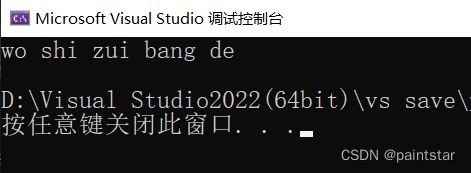
	for (auto item : ex1)
	{
		cout << item << " ";
	}
	cout << endl;
	return 0;
}
2.vector<类型> name1(name2);
#include<bits/stdc++.h>
using namespace std;
int main()
{
	string s[] = {"wo","shi","zui","bang","de"};
	vector<string> ex1(s, s + 5);
	vector<string> ex2(ex1);  //将ex1赋值给ex2
	for (auto item : ex2)
	{
		cout << item << " ";
	}
	cout << endl;
	return 0;
}
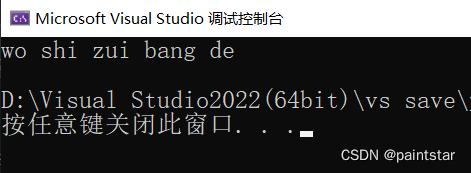
3.vector<类型> name={};
#include<bits/stdc++.h>
using namespace std;
int main()
{
	string s[] = {"wo","shi","zui","bang","de"};
	vector<string> ex1={ "wo","shi","zui","bang","de" }; //和数组一样
//	vector<string> ex2(ex1);
	for (auto item : ex1)
	{
		cout << item << " ";
	}
	cout << endl;
	return 0;
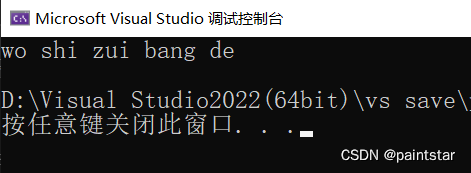
}
2.定义后赋值
相同类型的vector直接赋值
#include<bits/stdc++.h>
using namespace std;
int main()
{
	string s[] = {"wo","shi","zui","bang","de"};
	vector<string> ex1={ "wo","shi","zui","bang","de" };
	vector<string> ex2;
	ex2 = ex1;  //将ex1赋值给已经定义之后的ex2
	for (auto item : ex2)
	{
		cout << item << " ";
	}
	cout << endl;
	return 0;
}
小研究
#include<iostream>
#include<vector>
using namespace std;
namespace zhx {
	int a=6;
	struct student
	{
		vector<char> name;
		int age;
	};
}
int main()
{
	cout << zhx::a << endl;
	using zhx::student;
	student x;
	x.age = 19;
	char name[20] = "xu yu xiang";
	vector<char> temp(name, name + 10);
	x.name = temp;
	for (auto item : temp)
	{
		cout << item<<" ";
	}
	cout << endl;
	for (auto item : x.name)
	{
		cout << item << " ";
	}
	cout << endl;
	return 0;
}
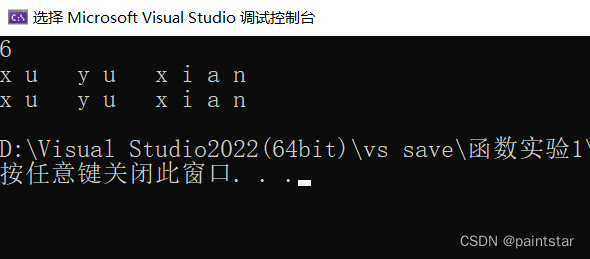
✳
谢谢你读到这里。
更新于 2022-07-02